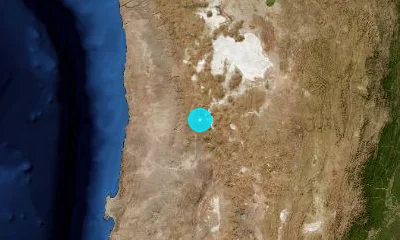
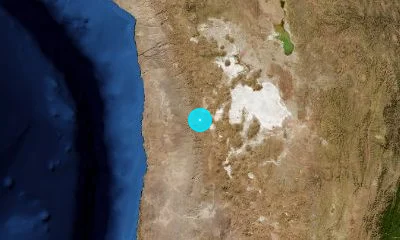
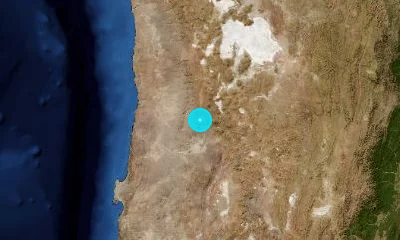
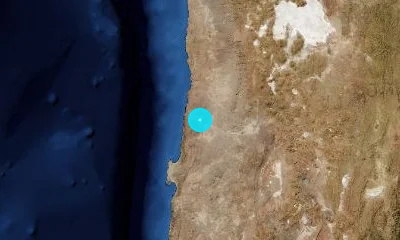
100 earthquakes recorded in Chile regional monitoring zone
Real-Time Earthquakes in Chile
Continuous seismic tracking along the Peru-Chile Trench and South American Plate margin.
Recent Earthquakes in Chile
LIVELive telemetry feed and seismic report for earthquakes in Chile.
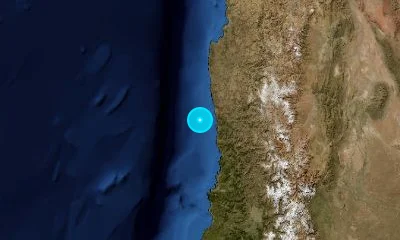
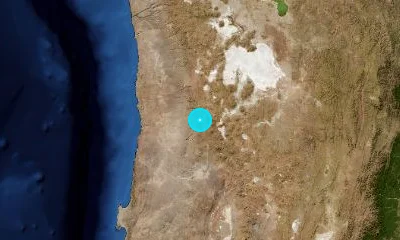
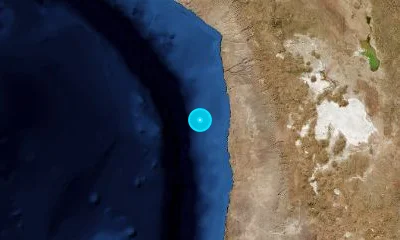
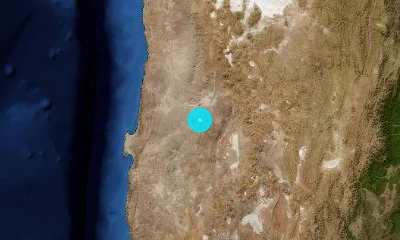
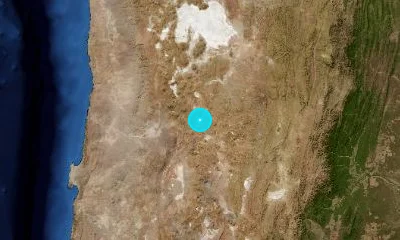
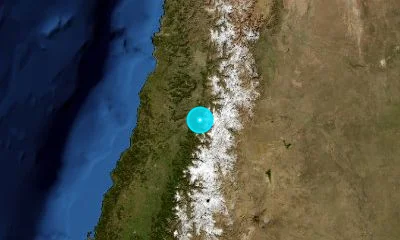
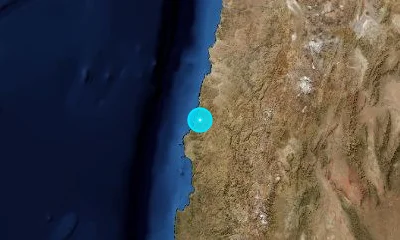
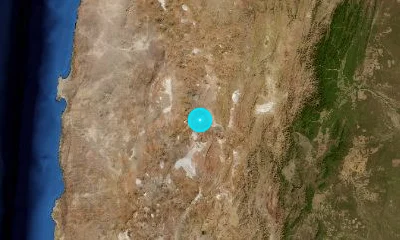
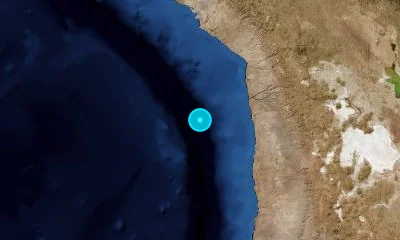
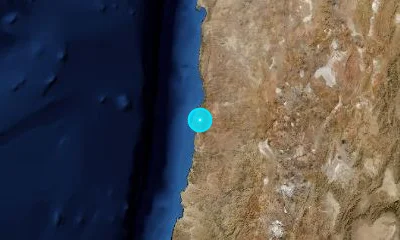
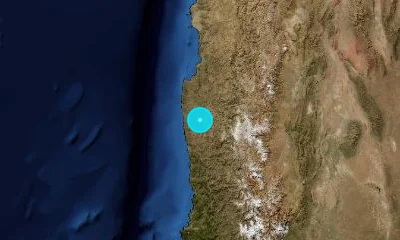
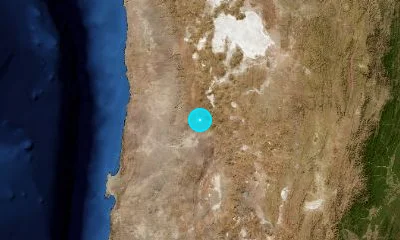
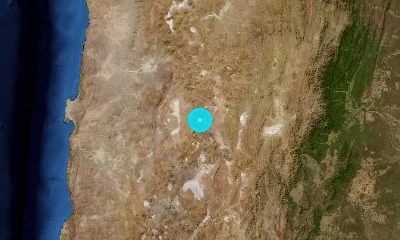
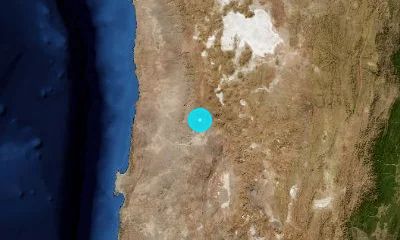
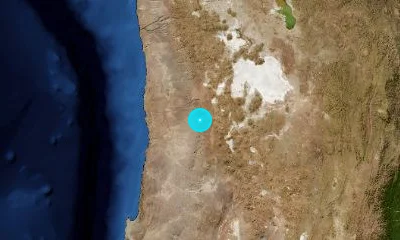
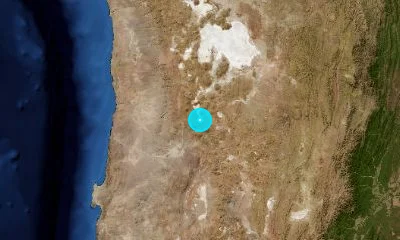
Active Fault Systems & Tectonic Setting
Geodynamic boundaries, subduction dynamics, and crustal deformation zones.
Chile is positioned along the Pacific Ring of Fire where the Nazca Plate subducts beneath the South American Plate at 65-80 mm/year. This high-velocity convergence creates one of Earth's most active seismic environments.
Peru-Chile Trench (Atacama Trench)
Subduction MegathrustPrimary convergent boundary capable of generating M8.0+ megathrust events.
Atacama Fault System (AFS)
Strike-Slip & NormalExtensive trench-parallel fault system traversing northern Chile's Coastal Cordillera.
Liquiñe-Ofqui Fault Zone (LOFZ)
Dextral Strike-Slip1,200 km fault zone controlling intra-arc volcanism and seismicity in southern Chile.
San Ramón Fault
West-Vergent Reverse ThrustActive piedmont thrust directly bordering the eastern suburbs of Santiago.
Landmark & Historical Earthquakes
Significant seismic benchmarks, cataloged magnitudes, and geological impacts.
Valdivia, Southern Chile
May 22, 1960The most powerful earthquake recorded in modern history; triggered a devastating Pacific-wide tsunami.
Maule Coast, Central Chile
February 27, 2010Megathrust rupture affecting 80% of Chile's population, initiating structural code updates worldwide.
Illapel, Coquimbo
September 16, 2015High-magnitude subduction thrust causing rapid coastal evacuation of 1 million citizens.
Frequently Asked Questions
Common questions about seismic activity, safety, and monitoring in Chile.
Why does Chile experience so many high-magnitude earthquakes?▾
Chile is positioned directly over the subduction zone of the Nazca Plate moving beneath the South American Plate at an exceptionally high velocity of 65–80 mm/year, accumulating massive friction that periodically releases as megathrust earthquakes.
What was the largest earthquake ever recorded in Chile?▾
The 1960 Valdivia Earthquake (M9.5) on May 22, 1960, is the strongest earthquake ever recorded on seismographs worldwide.
How does Chile's early warning and tsunami response work?▾
Seismic monitoring by CSN feeds real-time telemetry to SHOA (Servicio Hidrográfico y Oceanográfico de la Armada), which issues automated radio, cellular (SAE), and coastal siren alerts within minutes of detection.